ServicesReverse Osmosis
Little Elm Reverse Osmosis, Installed Carefully Under the Sink
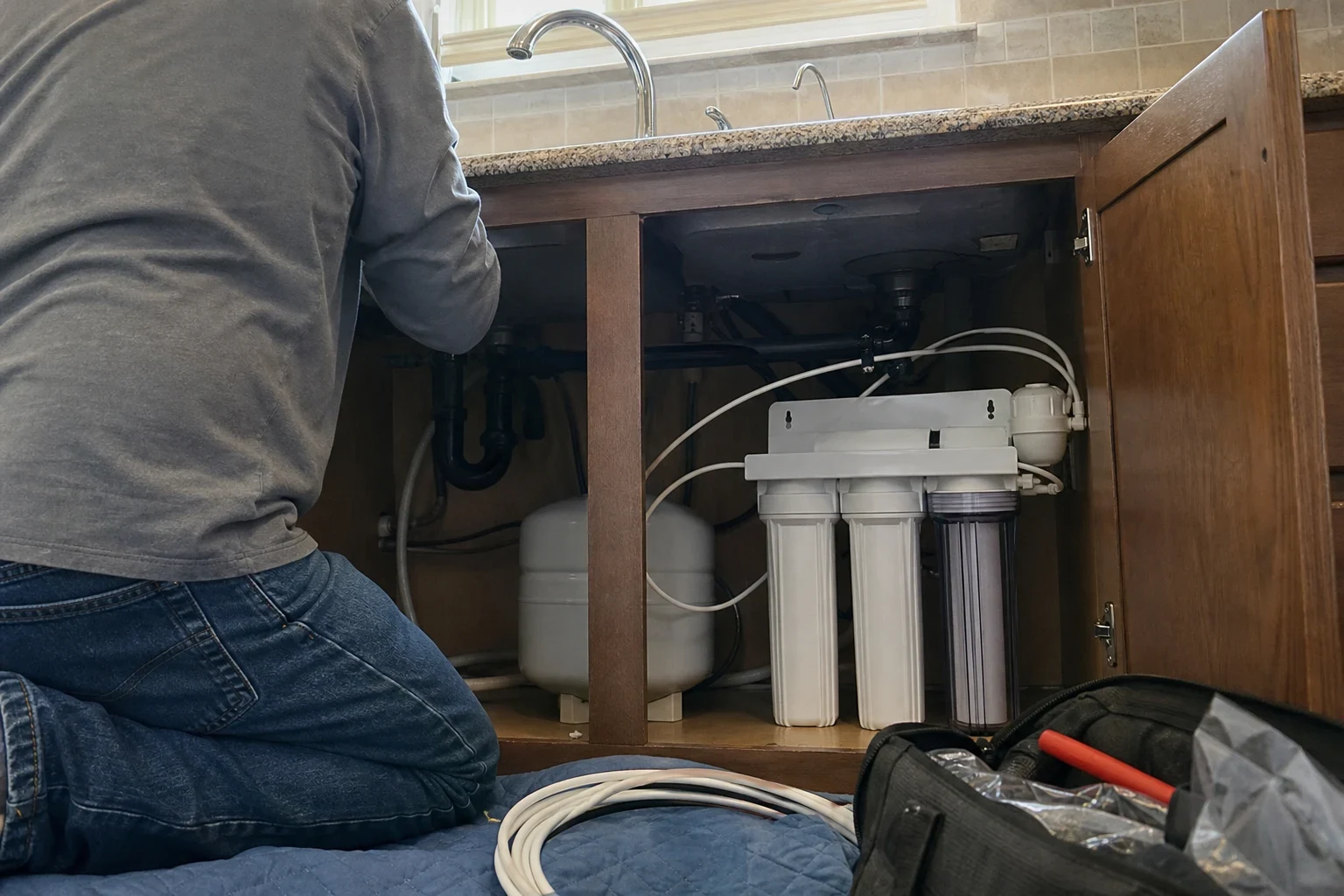
Our under-sink reverse osmosis installs give your kitchen its own tap for water you drink and cook with. The membrane handles the filtering, yet it is the drain hookup, the tubing routes and the tank pressure that determine whether the unit runs quiet and leak-free for years.
What Reverse Osmosis Does and When It Fits
A reverse osmosis system pushes your tap water through a semi-permeable membrane with pores far smaller than a carbon filter can manage. Dissolved minerals, salts and many trace contaminants stay behind and are rinsed to the drain. A carbon pre-filter protects the membrane from chlorine, and a carbon post-filter polishes the taste before water reaches the faucet.
It is the right call when you want very clean water for drinking, coffee, ice and cooking, but do not need every tap in your home treated. If the issue is disinfectant smell in the shower or across the house, whole-home filtration is the better match, and many homes pair the two.
What Our Reverse Osmosis Installation Includes
Feed valve on the cold line
We tie into the cold supply with a dedicated adapter and shutoff, so you can isolate the RO system without turning off the kitchen faucet.
Drain saddle placed above the trap
The drain line clamps to the sink tailpiece above the P-trap, never below it. A saddle set too low pulls sewer odor back toward the membrane and can gurgle every time the system flushes.
Clean, supported tubing runs
Tubing is cut square, fully seated in each push-fit or compression fitting and routed without sharp bends. A kinked line slows production and stresses the fitting until it weeps.
Tank pressure set before filling
We check the storage tank's air pre-charge with a gauge while it is empty. A tank with too little air delivers a weak trickle at the faucet, which most people mistake for a bad membrane.
Dedicated faucet, mounted solid
The RO faucet goes in an existing sink hole or a new opening drilled to suit your countertop material, then is tightened from below so it does not spin in daily use.
Flushing, leak checks and cleanup
We flush the carbon fines and the first tank of water to drain, dry every joint and check it again under pressure. The cabinet floor is left clean and clear.
Signs an RO System Belongs in Your Kitchen
You are hauling bottled water
If cases of bottled water or a pitcher filter are a weekly chore, an RO tap puts that quality at the sink without the plastic or the refills.
Coffee and tea taste off
Disinfectant and dissolved minerals both change how coffee and tea extract. Removing them is often the first thing customers notice.
Cloudy ice or white film
Ice that comes out cloudy, or a chalky ring in the kettle, points to dissolved solids that a membrane removes well.
You want extra assurance
Municipal water meets standards, yet some households, especially those with infants or older plumbing, want another barrier at the drinking tap. Reverse osmosis is a sensible way to add one.
Your fridge filter is not enough
Refrigerator cartridges are small carbon blocks. We can run an RO line to the ice maker and water dispenser so both draw from the same treated supply.
How Installation Day Runs
- 1
We talk it through by phone
You describe your sink, cabinet space and whether you want a fridge connection. We explain the system options that suit your kitchen and give you a quote over the phone. We also ask what filters you use now, since heavy sediment or hardness shortens membrane life.
- 2
We check pressure and space
On arrival we measure your incoming water pressure, since a membrane needs enough push to produce well. Low pressure means a small booster pump, and we tell you before anything is installed.
- 3
Supply, drain and faucet connections
This part of the job is handled by subcontracted master-licensed plumbers. They mount the filter housings off the cabinet floor, make the supply and drain connections and set the faucet.
- 4
Flush, test and show you the system
We flush the filters, fill the tank, check every joint under pressure and show you the shutoff and the filter order so cartridge changes are simple later.
What Moves the Cost of a Reverse Osmosis System
Your quote depends on the system you choose and what we find under the sink. We explain each line before work starts. Standard professional installation is included for qualifying homes.
- System design
- A basic four or five stage unit with a storage tank costs less than a tankless model or one with a remineralization stage that adds calcium and magnesium back for taste.
- Countertop material
- When your sink already has an open sprayer or soap dispenser opening, the faucet can mount there with little extra labor. Quartz and granite call for a diamond core bit and slow, water-cooled cutting, which takes longer than going through laminate.
- Refrigerator or ice maker line
- Running treated water to the fridge adds tubing, a tee and a shutoff, and the length of the run matters.
- Water pressure
- If your incoming pressure is low, a booster pump keeps the membrane producing efficiently and adds to the parts list.
Reverse Osmosis Questions
Something not covered here? (972) 430-7726
Do RO systems send water down the drain?
Yes, every unit rinses its membrane with some water that goes to the drain, which stops the membrane from clogging. Booster pumps and newer designs lower that ratio, and we can explain the difference while giving you a quote over the phone.
How often are the filters replaced?
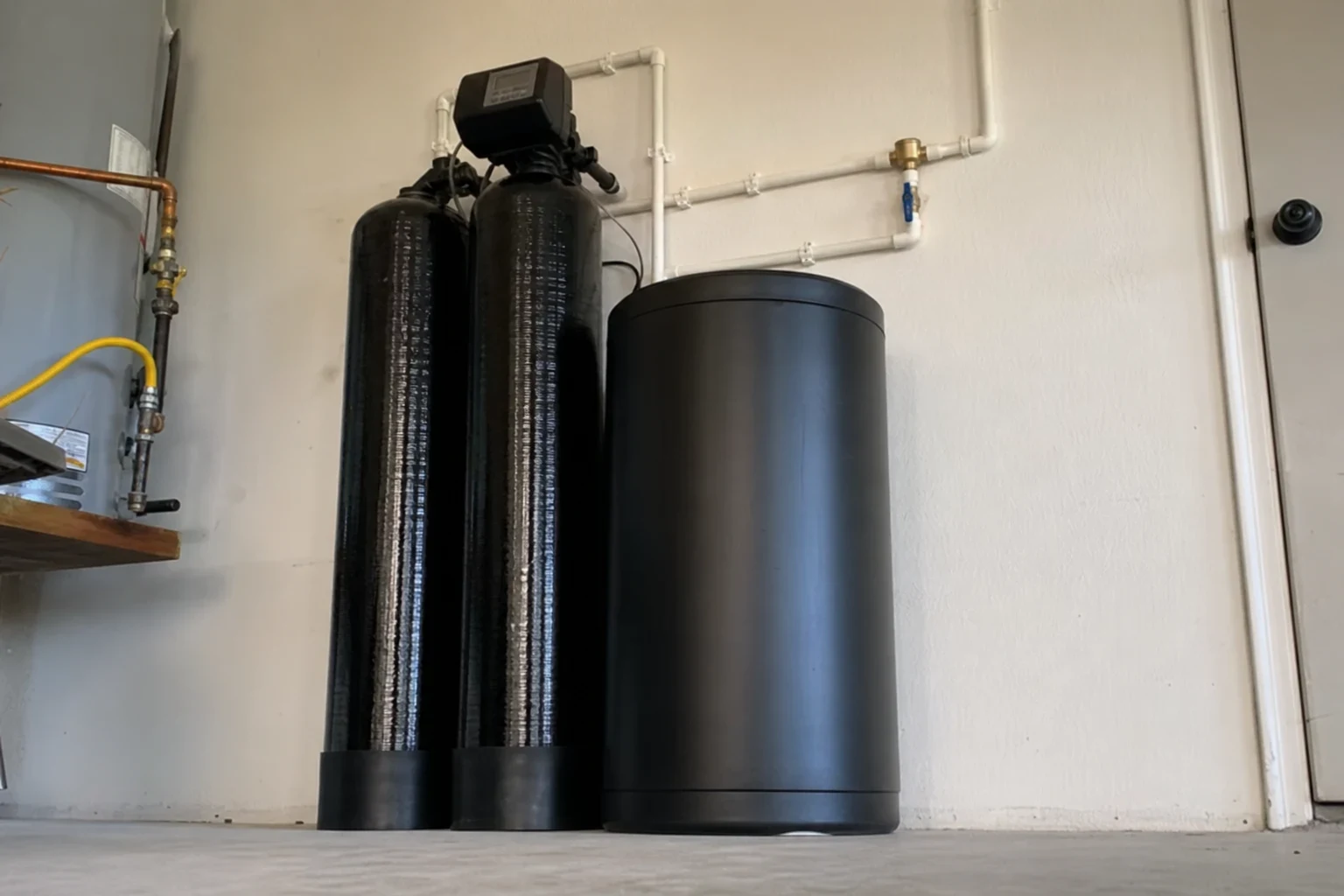
The pre-filters and post-filter usually get swapped every six to twelve months. The membrane lasts a few years, depending on your water and how much you use. Hard water wears a membrane out faster, so some homes add one of our water softeners alongside RO.
Does the RO faucet pour as quickly as my main faucet?
No, its flow is slower on purpose. If it slows to a trickle, the cause is usually low air pre-charge in the tank or a used-up pre-filter, and both are fast fixes.
Will RO water taste bland?
Once the minerals are gone, some people notice a very plain taste. A remineralization stage puts a little calcium and magnesium back, and plenty of customers like the result better.
What happens if a fitting drips after the install?
Our 1-year workmanship warranty on installation-related defects applies. If a joint we made begins to weep or a fitting we set works loose, we return and repair it. Drips usually show up in the first few days, so we dry every joint and check it again at full pressure before leaving.
Ready for Better Water at the Kitchen Tap
Tell us about your sink and whether you want a fridge line, and we will price a system that fits. We serve Little Elm, Frisco, The Colony, Prosper and nearby towns.