ServicesWater Softeners
Water Softener Installation in Little Elm
We size each softener from a hardness reading and how much water your home actually uses. Then we plumb it with a bypass valve, a proper drain air gap and a salt setting that matches your water, so the resin lasts and the salt bill stays sensible.
What a Softener Does, and When It Makes Sense
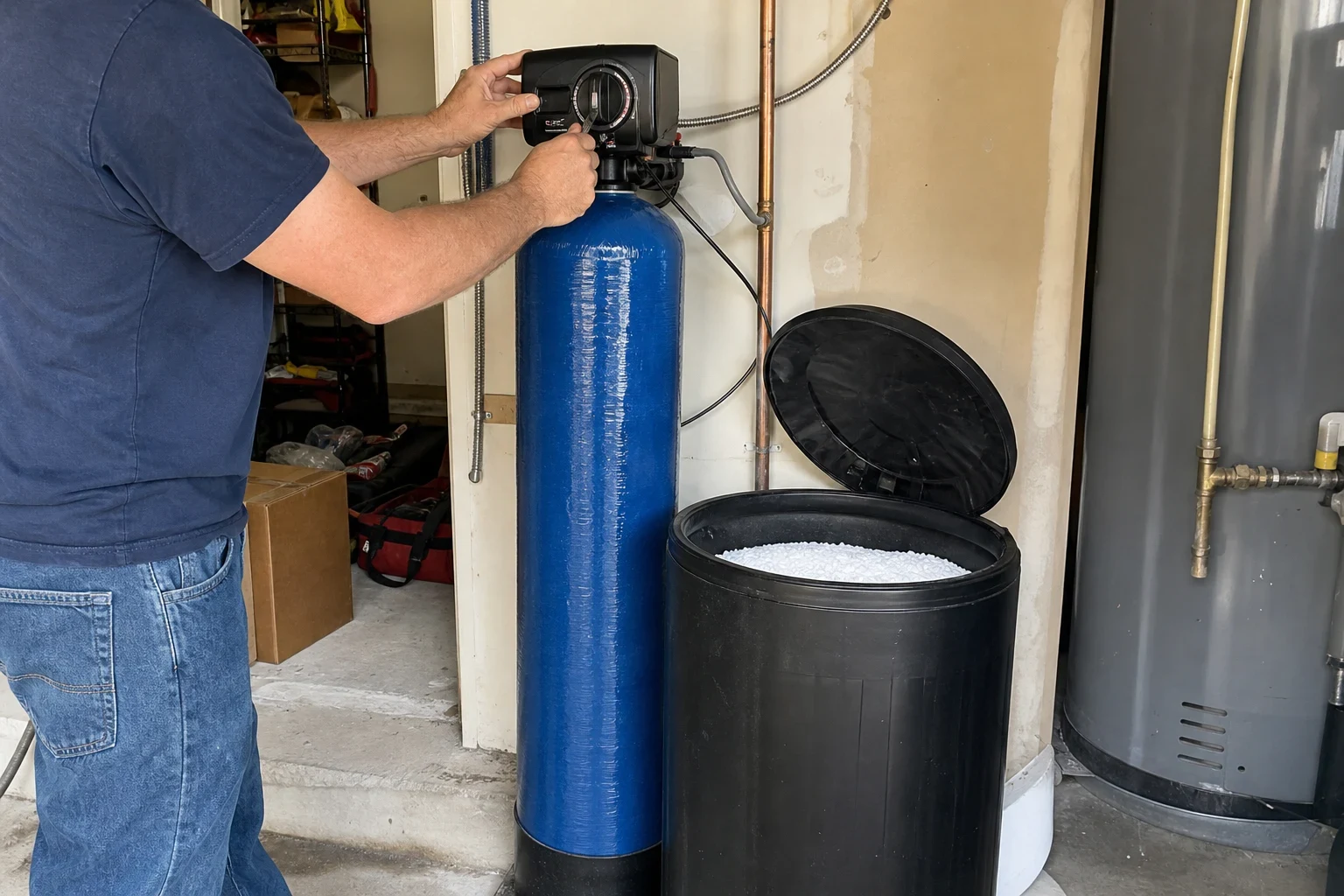
Inside a softener is a tank of small resin beads charged with sodium or potassium ions. As hard water flows through, the beads grab calcium and magnesium and release sodium or potassium in their place. Calcium and magnesium are what leave white crust on faucets, film on shower glass and scale inside a water heater. When the beads are loaded up, the control valve rinses them with brine from the salt tank and they are ready again.
A softener only pays off if your water is hard enough to cause those problems. So we check hardness at your tap before we recommend one. If the reading is low, we tell you, and we may point you toward whole-home filtration or reverse osmosis if taste or odor is the real complaint.
Most failures we see come from installation shortcuts rather than bad equipment: no bypass, a drain hose jammed into a standpipe, a unit sized too small that regenerates every other night. Those details are where we spend our time.
What Your Softener Installation Includes
- Sizing from real numbers
- Your hardness reading, combined with the gallons your home goes through each day, tells us how many grains the softener has to pull out between cycles. We choose a tank with enough capacity to regenerate every several days instead of nightly, which saves salt and wears the valve less.
- Metered, demand-based control valve
- We set the valve to regenerate based on gallons used, not a fixed timer. That way the softener only uses salt when the resin is actually spent.
- Three-valve or factory bypass
- No softener goes in without a bypass. It lets you take the unit offline for service or a resin change while the rest of your home keeps running water.
- Code-correct drain and overflow
- The regeneration drain line discharges through an air gap so wastewater can never siphon back into the softener. The brine tank overflow gets its own line to the drain, not a cap or a loose loop on the floor.
- Qualified hands on the main line
- The plumbing connections on our installations are handled by subcontracted master-licensed plumbers, so the cut-in on your main line is done by someone qualified for that work.
- Setup and walkthrough
- We program the hardness setting, run a first regeneration and show you how to check the salt level and break up a salt bridge.
Signs Your Home Could Use a Softener
Crust on faucets and showerheads
White or chalky buildup around aerators and spray nozzles is calcium carbonate left behind as water evaporates.
Spotted dishes and cloudy glass
Hard water leaves mineral film that dishwasher detergent struggles to rinse away, especially in a hot cycle.
A rumbling water heater
Heating water pushes calcium carbonate out of solution, and it piles up as a layer on the tank floor. Pockets of water caught beneath that layer boil and pop. The noise tells you the burner or element is heating through a blanket of minerals.
Thin suds and a sticky film
Hardness minerals react with soap to form a gray curd instead of a rich lather. You end up using more shampoo and body wash, and a film still clings to your skin and the tub.
An old softener that stopped keeping up
If you are still adding salt but seeing scale again, the resin may be worn out or fouled, or the valve may be set for the wrong hardness. We can check whether a reset, a resin change or a replacement is the honest answer.
What Moves the Price of a Softener
Your quote depends on the softener you need and on how much plumbing it takes to put it in correctly. We give you the number by phone and explain what is in it before any work is scheduled. Standard professional installation is included for qualifying homes.
Grain capacity and tank size
Harder water and larger households need more resin, which means a bigger tank and more salt per regeneration.
Existing softener loop
Many newer homes have a loop already stubbed out near the water heater or garage. Without one, the plumber has to cut into the main line and add fittings, which adds labor.
Drain and power access
A floor drain or laundry standpipe close by keeps things simple. A longer drain run or a new outlet nearby adds time.
Added pre-filtration
Chlorine in city water can break down resin over the years. Pairing the softener with a carbon stage from our whole-home filtration line adds to the cost but helps the resin last.
How the Install Day Runs
- 1
Check the hardness and the location
We confirm the hardness reading and look at where your main line enters, usually in the garage on North Texas homes. We note the nearest drain and outlet so the drain line and power cord do not run across a walkway.
- 2
Shut off and cut in
Water is off for a short stretch while the plumber cuts into the main line, fits the bypass and connects the softener. Outdoor hose bibs are left on hard water where the plumbing allows, since lawns do not need softened water.
- 3
Drain, overflow and salt
We run the drain line to an air gap, connect the brine overflow, load the salt and set the valve for your hardness and household size.
- 4
Test and clean up
We run a regeneration cycle, check every fitting for drips under pressure and test the softened water at a tap. Then we clear away pipe offcuts and packaging before we leave.
Water Softener Questions
Is softened water safe to drink?
For most people, yes. Softening trades hardness minerals for sodium, so the harder your water starts out, the more sodium ends up in the glass. If you are watching your sodium intake, we can run the softener on potassium chloride instead, or add a reverse osmosis system at the kitchen sink for drinking water.
How often will I add salt?
That depends on your hardness, water use and tank size. A correctly sized, metered unit usually needs salt topped up every several weeks. We show you how to check the level and how to break up a salt bridge, a hard crust that can form over the brine.
Will a softener remove chlorine or improve taste?
No. A softener only targets hardness minerals. If taste or odor bothers you, whole-home filtration with carbon handles that, and many homes run both with the carbon stage ahead of the softener.
What warranty comes with the install?
Our installations carry a 1-year workmanship warranty that covers defects related to the installation. Equipment warranties come from the manufacturer and vary by model, and we go over those with your quote.
Do you check my water before recommending one?
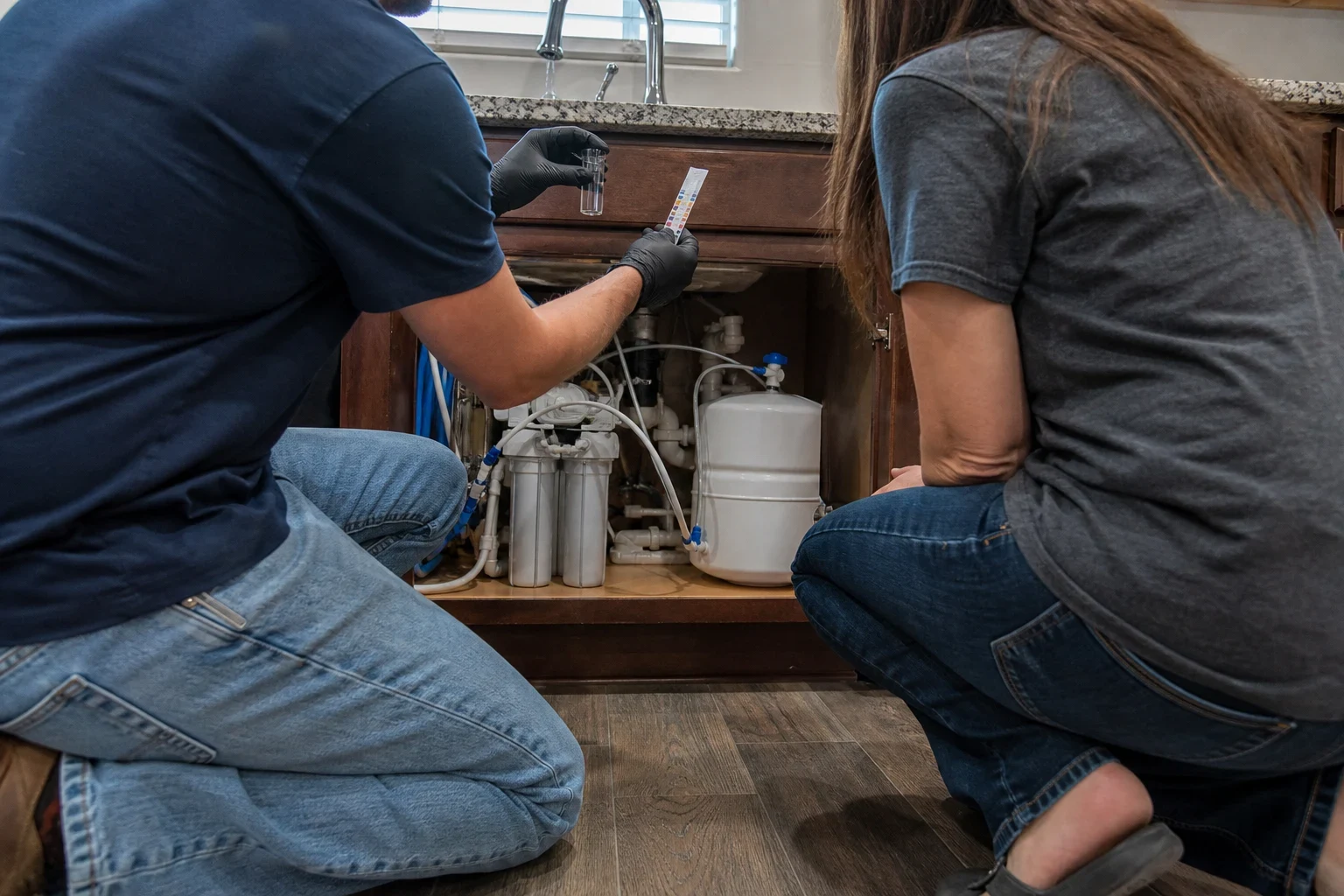
Yes. We take a hardness reading at your tap so the softener is sized from a real number, not a guess. If the result says you do not need one, we will tell you that.
Get the Right Softener Size for Your Household
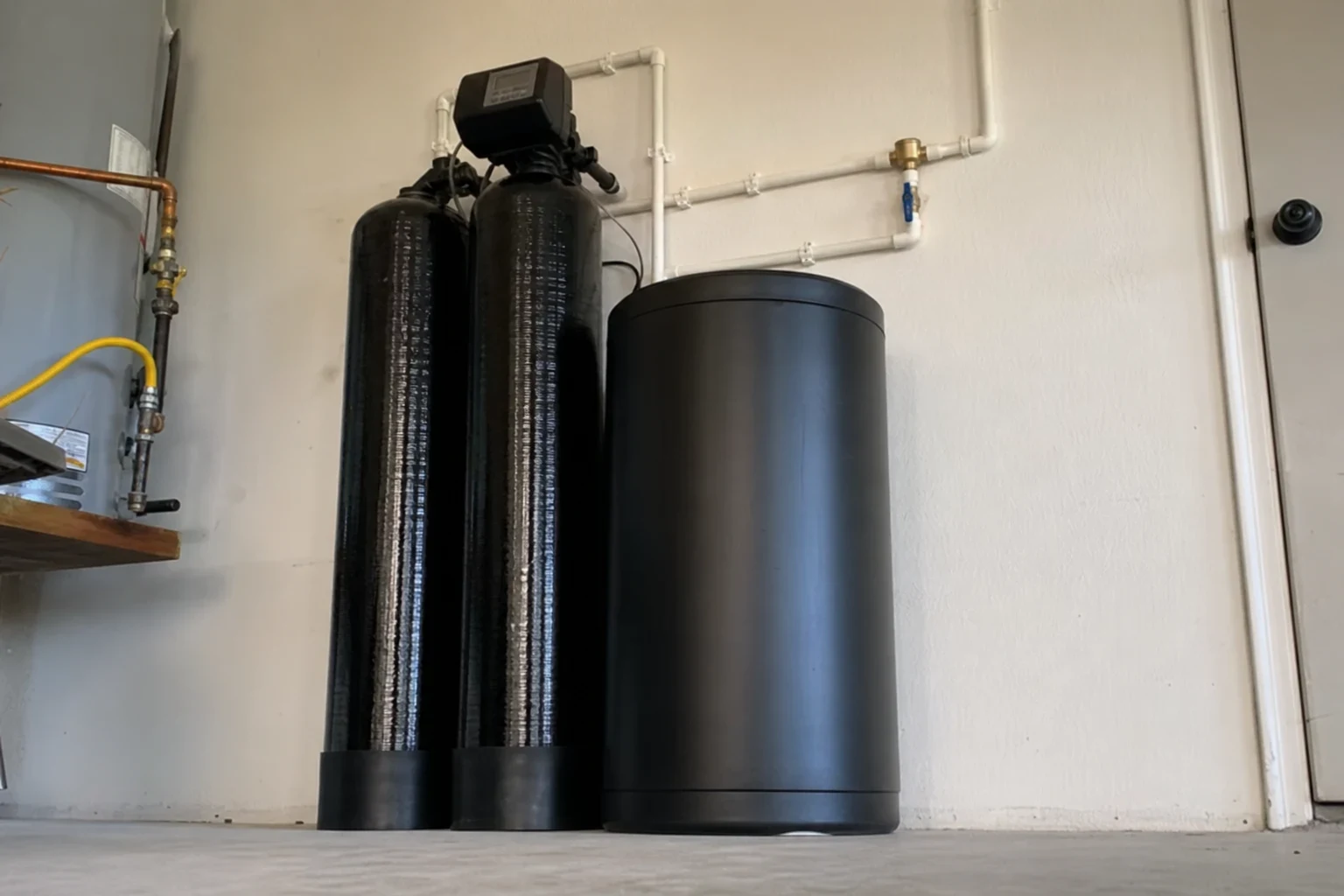
Let us know how many people share your water and what you are noticing on fixtures and glassware. We will go over sizing, where the unit should sit and what the installation involves.