ServicesWhole-Home Filtration
Whole-Home Filtration in Little Elm
We install point-of-entry carbon systems on your main line so every tap, shower and appliance gets filtered water. The tank size, the bypass valve and the pipe connections decide whether the system still runs quietly in five years, so we take our time on each one.
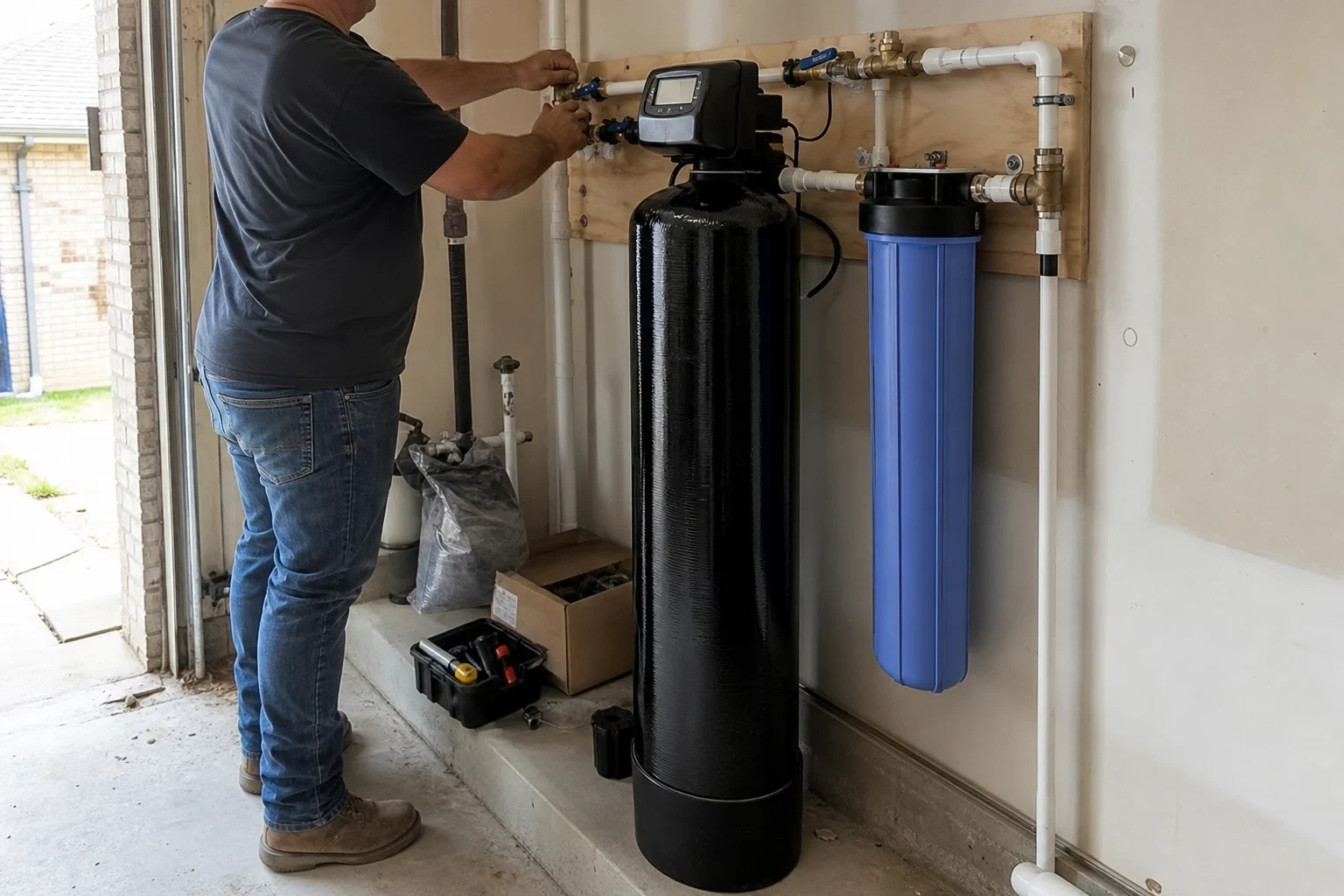
What a Whole-Home System Does and When It Fits
A whole-home filter sits on the main water line after the meter and before the water heater. City water arrives disinfected with chlorine or chloramine, and a properly sized bed of carbon media pulls out that taste and smell before the water reaches any fixture in your home. A sediment prefilter ahead of the tank catches grit so the carbon lasts longer.
It is the right call when the complaint is everywhere: the shower smells like a pool, the ice tastes off, and you are buying pitcher filters for three sinks. If your only concern is drinking and cooking water, reverse osmosis at the kitchen sink is the better match. If the issue is white scale on glass and fixtures, a water softener addresses hardness, which carbon does not.
What Goes Into Our Installation
Carbon tank sized to flow
We look at how many showers, toilets and water-using appliances your home has, work out the highest demand they create together, and choose a tank that holds enough media for proper contact time. Too little carbon lets chlorine pass through, and pressure sags when two showers run at once.
Sediment prefilter
A cartridge housing ahead of the carbon traps sand and pipe scale. We mount it where you can reach it, with space below to drop the bowl for changes.
Three-valve bypass
Shutoffs on both sides plus a bypass let you keep water flowing to the house during media changes or service. Without one, any filter work means shutting off your whole home.
Ground bonding jumper
When a filter interrupts metal pipe, the electrical ground path through the plumbing can break. We bridge it with a bonding jumper so the system stays code-compliant and safe.
Pressure gauges and clean fittings
Gauges before and after the system show when the prefilter is loading up. Joints are made with fittings matched to your pipe, whether copper, PEX or CPVC, so dissimilar metals and mismatched connectors do not cause slow leaks later.
Signs Your Home Could Use Whole-Home Filtration
Chlorine smell in a hot shower
Heat releases dissolved chlorine into the air, so the bathroom is often where you notice it first. A carbon bed removes it before the water reaches the heater.
Off taste at every faucet
If the bathroom sink and the fridge dispenser taste the same as the kitchen tap, the fix belongs at the main line, not one faucet.
Debris in faucet screens
Unscrew an aerator or the washing machine inlet screen and find specks of sand or small flakes, and you know sediment is moving through your lines. A prefilter ahead of the carbon would stop it.
Pitcher filters in several rooms
Buying and changing small filters for multiple taps usually costs more effort than a single system that covers them all.
An old housing nobody maintains
A cracked or yellowed cartridge housing with no bypass is a leak waiting to happen. We can replace it with a setup you can actually service.
How Your Installation Day Runs
- 1
Your call and quote
Tell us what you are noticing and how large your home is. We explain what a system would involve and ask the questions that shape the scope, so you get your quote by phone with nothing vague in it.
- 2
Locating the main line
We find where the main enters, often in the garage, and check pipe material, wall space and whether a pre-plumbed loop exists. This decides fittings and placement before anything is cut.
- 3
Cut-in and flush
The plumber shuts off the water, installs the shutoffs, bypass, prefilter and tank, then flushes the new carbon until the water runs clear of fines. Every joint is checked under pressure before the system goes into service.
- 4
Walk-through and cleanup
We show you the bypass, the gauges and how to change the prefilter, note the date on the housing, and leave the area as we found it.
What Moves the Price
Most of the cost comes from two things: how much media your home needs and how much plumbing it takes to reach the main line cleanly. Standard professional installation is included for qualifying homes, and we explain on the call whether yours qualifies. Your quote lists the equipment and any extra pipe work separately.
- Home size and flow demand
- More bathrooms mean higher peak flow, which calls for a larger tank and more carbon.
- Media type
- Standard carbon handles chlorine well. Chloramine needs catalytic carbon, which costs more but does the job.
- Access to the main
- An open wall near the entry point is simple. Tight spaces, rerouting or extending pipe add labor and material.
- Pipe material and existing loop
- Copper, PEX and CPVC each need their own fittings, and a ready-made loop can shorten the job considerably.
Whole-Home Filtration Questions
Something not covered here? (972) 430-7726
Will I notice lower pressure after the install?
Only slightly, if the tank matches your home. A big drop usually traces back to an undersized tank or a sediment cartridge that is overdue for a change. We size the system to your busiest stretch of water use and add gauges, so a loaded cartridge shows up as a widening gap between the two readings.
How often does the media need replacing?
Sediment cartridges usually need changing every few months, depending on how much grit your water carries. Carbon media lasts much longer, typically several years, based on tank size and household water use. We explain the schedule for your specific system at the walk-through.
Does it soften water too?
No. Carbon takes out chlorine and chloramine taste and odor, along with some organic compounds. Hardness minerals pass straight through a carbon bed, so it will not stop the white crust that builds on fixtures and glassware. If that buildup bothers you, we can talk through a water softener alongside the filter.
Who does the plumbing, and is the work covered?
The plumbing on every install is done by master-licensed plumbers we subcontract. The installation also carries a 1-year workmanship warranty on installation-related defects, so a joint or fitting problem caused by the install is ours to fix.
Where does the system go if I have no garage access to the main?
We look for the nearest serviceable point after the meter and before the water heater. Sometimes that is an exterior wall with a weather-rated enclosure, sometimes a utility closet. We confirm placement before quoting.
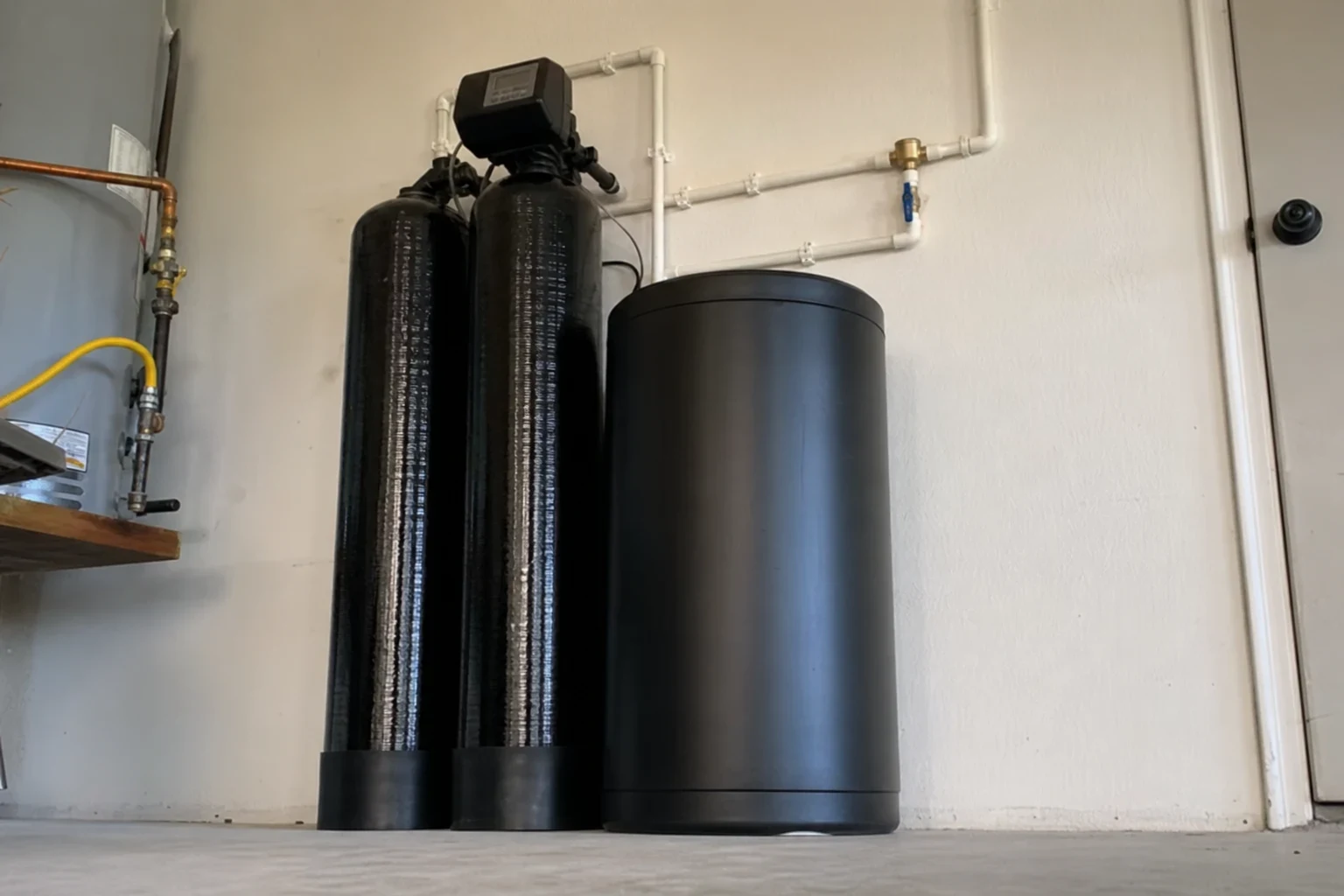
Filtered Water at Every Tap, Installed Properly
Tell us about your home and what you are tasting or smelling. We will explain the tank size, media and plumbing your setup needs.